
Oh, how I wish I had a book like this when I began teaching psychology. From a visual learner's point of view, this book hits the jackpot. It begins with a history of studying the brain, landmarks in neuroscience and photos of a series of brain scans. You know all those pesky little questions that your students ask, but you're not sure of the answer because your neuroscience course was 20+ years ago and the images (I mean drawings) were in black and white? This book has those answers. There are 70+ pages of pictures and explanations of brain anatomy (all the parts, not just the ones in our texts), brain zones, neurons, and research to satisfy the best of us.
This book has a chapter on the senses, one on movement and control, emotions and feelings, the social brain, language and communication, memory, thinking, consciousness, the individual brain, development and aging, and concludes with diseases and disorders.
Although I have not read every word on every page, just for the illustrations, I am giving this book my highest recommendation. It is a must for every psychology class. Order by clicking below. You will not be disappointed.
Posted by Chuck Schallhorn
|
|
|
|---|

Of course, we are all fascinating by illusions. Now, it seems that there is an artist who creates them using Adobe Photoshop. His name is Erik Johansonn, a Swedish designer. While there are many examples, here are a couple of which we will tease you with below. You can find these and more of his work at this site: http://www.alltelleringet.com/
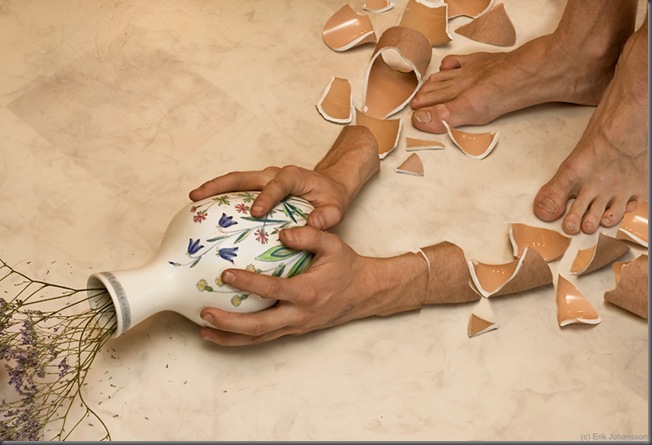
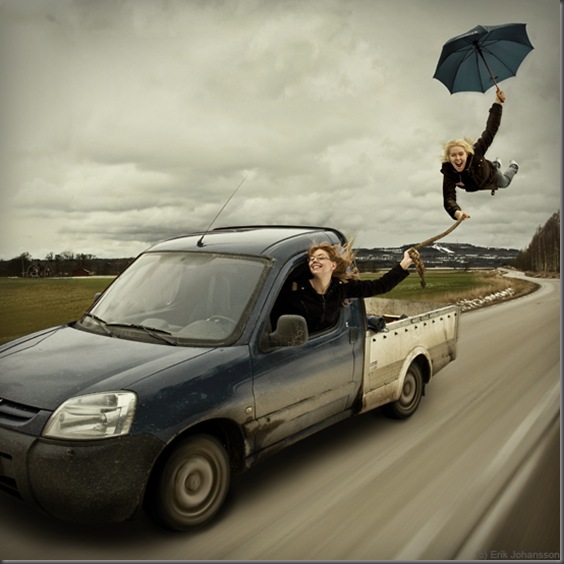
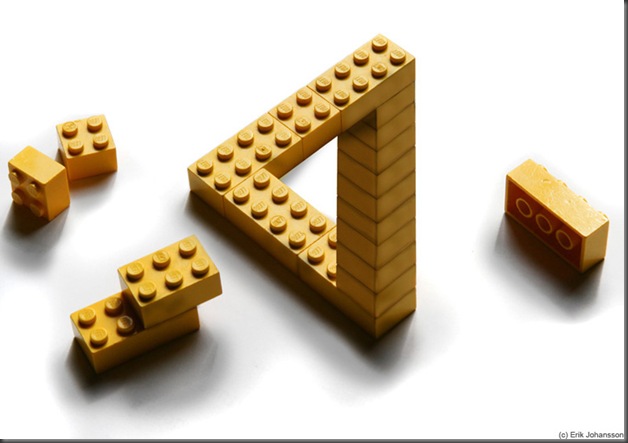
Of course, we are all fascinating by illusions. Now, it seems that there is an artist who creates them using Adobe Photoshop. His name is Erik Johansonn, a Swedish designer. While there are many examples, here are a couple of which we will tease you with below. You can find these and more of his work at this site: http://www.alltelleringet.com/
Going back through my bookmarks, I (Chuck) ran across this site, Optics for Teens. The site is very basic, but includes great information:
What is optics?
Celebrities and experts in the fields of light
Optical Illusions
Additional links to light and vision
Gallery Page
Page for Teachers and Parents
The image below is in the site's gallery as an example of the sun seen in three ultraviolet lights

Going back through my bookmarks, I (Chuck) ran across this site, Optics for Teens. The site is very basic, but includes great information:
What is optics?
Celebrities and experts in the fields of light
Optical Illusions
Additional links to light and vision
Gallery Page
Page for Teachers and Parents
The image below is in the site's gallery as an example of the sun seen in three ultraviolet lights
When I (this is Chuck) began teaching AP Psych, I had difficulty explaining why certain illusions were based in the eye and why others were based in the brain. I had never had an undergraduate course in sensation and perception and my book resources were almost non-existent. There is a proliferation of illusion sites on the web, but few actually explain the illusion. I've discovered the Illusion Sciences blog site that explains the illusions much to my delight.
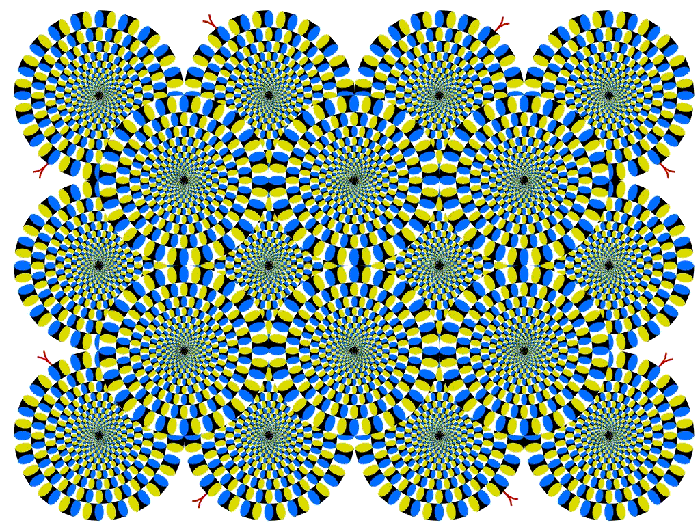
When I (this is Chuck) began teaching AP Psych, I had difficulty explaining why certain illusions were based in the eye and why others were based in the brain. I had never had an undergraduate course in sensation and perception and my book resources were almost non-existent. There is a proliferation of illusion sites on the web, but few actually explain the illusion. I've discovered the Illusion Sciences blog site that explains the illusions much to my delight.
In the last few months, 
Students can have fun trying to write their name, pick up an object or draw a picture using the goggles. The inversion goggles work perfectly when covering how the lens in the eye inverts the image.
A student in the AP Psychology class at Pinkerton Academy of Derry, NH has posted a short (1:38) YouTube video of someone wearing a set of inversion goggles trying fairly unsuccessfully to write her name on a white board at http://www.youtube.com/watch?v=lpKEHEuJ2oQ It should be noted, the goggles in the video are not from PsychKits, but instead made by Jim Matiya who for many many years was the main supplier of both displacement and inversion goggles for teachers around the country.
For more information on the inversion goggles go to http://www.psychkits.com/inversion_goggles.html
For the PsychKits.com homepage go to http://www.psychkits.com Be sure to check out the displacement goggles as well.
In the last few months,
Students can have fun trying to write their name, pick up an object or draw a picture using the goggles. The inversion goggles work perfectly when covering how the lens in the eye inverts the image.
A student in the AP Psychology class at Pinkerton Academy of Derry, NH has posted a short (1:38) YouTube video of someone wearing a set of inversion goggles trying fairly unsuccessfully to write her name on a white board at http://www.youtube.com/watch?v=lpKEHEuJ2oQ It should be noted, the goggles in the video are not from PsychKits, but instead made by Jim Matiya who for many many years was the main supplier of both displacement and inversion goggles for teachers around the country.
For more information on the inversion goggles go to http://www.psychkits.com/inversion_goggles.html
For the PsychKits.com homepage go to http://www.psychkits.com Be sure to check out the displacement goggles as well.

As it turns out, there is a name for this phenomenon--it is called an "earworm." 
- Wikipedia Entry on Earworms
- WebMD Entry
- SFGate Article
- University of Cincinnati article on sources and possible explanations for a business college article, it was awfully full of science
As it turns out, there is a name for this phenomenon--it is called an "earworm."
- Wikipedia Entry on Earworms
- WebMD Entry
- SFGate Article
- University of Cincinnati article on sources and possible explanations for a business college article, it was awfully full of science


