
Oh, how I wish I had a book like this when I began teaching psychology. From a visual learner's point of view, this book hits the jackpot. It begins with a history of studying the brain, landmarks in neuroscience and photos of a series of brain scans. You know all those pesky little questions that your students ask, but you're not sure of the answer because your neuroscience course was 20+ years ago and the images (I mean drawings) were in black and white? This book has those answers. There are 70+ pages of pictures and explanations of brain anatomy (all the parts, not just the ones in our texts), brain zones, neurons, and research to satisfy the best of us.
This book has a chapter on the senses, one on movement and control, emotions and feelings, the social brain, language and communication, memory, thinking, consciousness, the individual brain, development and aging, and concludes with diseases and disorders.
Although I have not read every word on every page, just for the illustrations, I am giving this book my highest recommendation. It is a must for every psychology class. Order by clicking below. You will not be disappointed.
Posted by Chuck Schallhorn
|
|
|
|---|

There may be some concern about the content of this post. As a group, we've considered the options and believe it best to expose the teachers to this issue. While some students may stumble upon this entry and links, we feel that the exposure to teachers outweighs potential risk of student exposure. Students will find this information in one way or another.
In short, these sites are ones that promote being thin as a lifestyle or see being thin as an ideal, sometimes called, "Pro-Ana" or pro-anorexia. While promoting statistics and information about eating disorders, that masks a reality that is very different. The content of these sites can be disturbing, but teachers need to realize the mind-set and thought processes of their students who may share these viewpoints. The views are of those who are not pro-recovery. At best, reading these blogs is fascinating. At worst, it is disturbing. In any case, they are worth checking out.
The first site is: http://www.mymirrorimage.moonfruit.com/
The site contains several galleries of thin women. There is one of severely obese women--but these are there only as a reminder of how the author feels about her own body.
To me this quote sums up this site: "I'm now back at University until the end of June. The doctor has pushed me into seeing a CPN again, and so i might have to see one again. I'm not going to stop though - I know as much as it might be better for me, i don't want to recover yet."
This next site is a blog called Yummy Secrets. The blog is noted as having a "content warning," but can be accessed by anyone. To quote from this blog (italics mine),
"This is a ProAna blog. For basic accurate information on the ProAna movement, please read Solidarity in the Proana Community, a well-researched article on Associated Content.com. For my personal opinion on ProAna read this post.
If you have an eating disorder and are seeking help for recovery, I wish you success, but please find help elsewhere. This blog will not help you and may be triggering. A good place to start is Something-Fishy.org. I wish you the best of luck and health.
If you are against ProAna and wish to express it, please do so by sending me an email. I will be happy to discuss it with you, but I'd prefer my blog didn't get spammed up with arguments."
One blog linked from the previous site is called, I Am Not Ill. There are dozens of other blogs for those who wish to follow others' views and experiences/perceptions of food and other aspects of life.
While you may not like the sites, they will give you some insight.
Celebrities and eating disorders can make for a potentially potent introduction into the eating disorders topic--after all, who has their bodies scrutinized more than celebrities and athletes?
One site that offers brief descriptions and small pictures is CaringOnline. On the left side of this page is a list/link of nearly 100 famous people who have suffered eating disorders. Each link goes to a brief description and includes some quotes.


 Warning--some images are offensive, either for their violent or sexual aspect of objectifying women--you should preview the site to see if it's appropriate for your school/community. The kids will likely be fine and some will be outraged. It's the adults that may find something objectionable.
 The "facts page" links to many issues including body image, media, eating disorders and disordered eating, cosmetic surgery and obesity.
Whether you draw from the site some particular references or have your students explore, it will make for some spirited discussion related to body image, women in the media, and more. Additionally, the blog makes for some very interesting reading. Go for it.

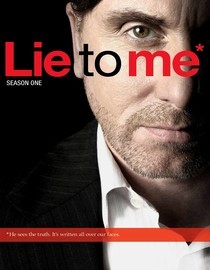
For those who love the show, the second season begins in June. Set those Tivos and DVRs now!
A few years ago, Dove Soap created a campaign for "real beauty" in an attempt to alter cultural attitudes toward what makes women attractive. This campaign originally featured the video below to make viewers aware of how much change goes into a woman's appearance before and after she is photographed. Whether it is lighting, makeup, or editing the photo, there is a clear and distinct difference between reality and the images that people see in the magazines. Below is their effort. Your students will be amazed if they are not already familiar with this video.
Here is a follow-up video showing Photoshop alterations to pictures:
A few years ago, Dove Soap created a campaign for "real beauty" in an attempt to alter cultural attitudes toward what makes women attractive. This campaign originally featured the video below to make viewers aware of how much change goes into a woman's appearance before and after she is photographed. Whether it is lighting, makeup, or editing the photo, there is a clear and distinct difference between reality and the images that people see in the magazines. Below is their effort. Your students will be amazed if they are not already familiar with this video.
Here is a follow-up video showing Photoshop alterations to pictures:

 I've always had a sweet tooth--I love the junk food and sugar in nearly all its incarnations. This morning, I saw an article on NPR called, "Junk Food Jones Is Wired in Your Brain." This confirmed what I suspected--I am an addict. It was shown in a fascinating bit of research which could even diverge into a discussion of ethics and animal research.
One quote: "Inside their little brains, the junk-food eating rats developed a big problem. Just like drug takers, the rats needed a bigger fix of junk food over time to maintain their pleasure. So they kept on eating, and kept on getting fatter. As the scientists explained in their paper, "extended access to palatable high-fat food can induce addiction-like deficits in brain reward function," which can spur overeating and lead to obesity."
If nothing else, this offers some good insight into the workings of the addicted brain and one factor in the obesity epidemic in the US.
I've always had a sweet tooth--I love the junk food and sugar in nearly all its incarnations. This morning, I saw an article on NPR called, "Junk Food Jones Is Wired in Your Brain." This confirmed what I suspected--I am an addict. It was shown in a fascinating bit of research which could even diverge into a discussion of ethics and animal research.One quote: "Inside their little brains, the junk-food eating rats developed a big problem. Just like drug takers, the rats needed a bigger fix of junk food over time to maintain their pleasure. So they kept on eating, and kept on getting fatter. As the scientists explained in their paper, "extended access to palatable high-fat food can induce addiction-like deficits in brain reward function," which can spur overeating and lead to obesity."
If nothing else, this offers some good insight into the workings of the addicted brain and one factor in the obesity epidemic in the US.
Just had a former student ask me about this video. I stumble across it from time to time. It sends a great message about making mistakes and getting back up--perseverance. I love it. Hope you do as well.
Some cynics may argue that these geniuses in their fields just needed the right outlet. Let me get all Maslow on you and say, "How do we know anyone is not a genius about something unless we give them a chance?" :-)


